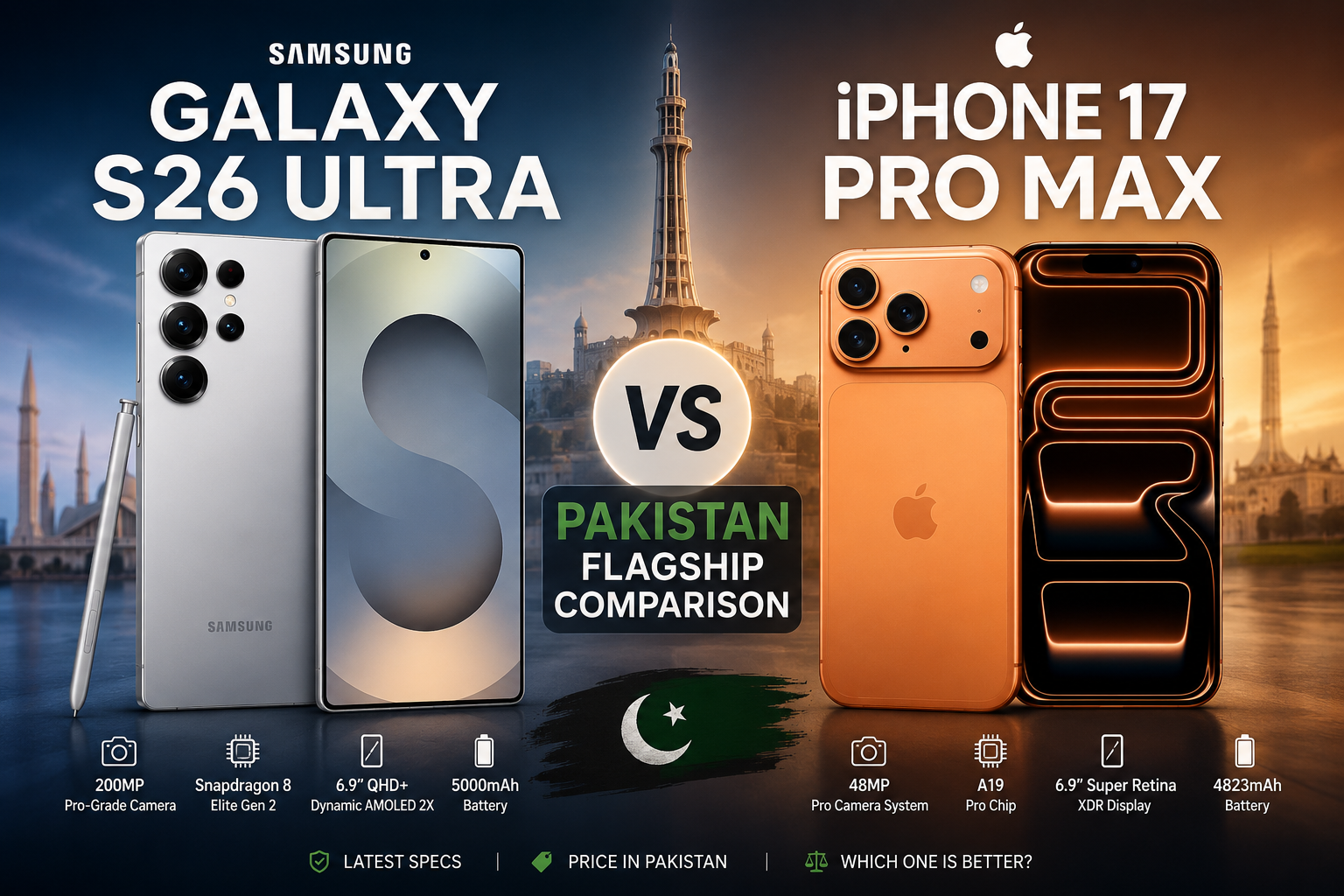
The flagship phone market has become predictable. Every year, Samsung and Apple launch even faster chips then previous year, brighter and cleaner screens, and smarter cameras. Prices go up a lot too. The real question is whether these upgrades still matter enough in the real market to justify the cost of these devices.
The Samsung Galaxy S26 Ultra and iPhone 17 Pro Max will likely dominate the premium flagship smartphone market in Pakistan. Both phones are powerful. Both are expensive. But they target different users.
Samsung focuses on features and flexibility. Apple focuses on stability and ecosystem control.
That difference matters more than just raw specs now.
The S26 Ultra is expected to continue that approach. It looks like a device designed to show off.
Apple still plays it safe.
The iPhone 17 Pro Max will probably look premium, but not very different from older Pro Max models. That consistency works for Apple fans, but it also makes the phone feel less exciting.
In Pakistan, people buying flagship phones usually care about visibility too. Samsung currently does a better job at making its phones feel futuristic.
Still, Samsung continues to lead in overall display quality.
The S26 Ultra is expected to offer higher brightness and better anti-reflective coating. That matters more than people think, especially outdoors in strong sunlight.
A smooth 120Hz display is no longer impressive in 2026. Even mid-range phones offer that now.
The real difference comes from brightness control, HDR quality, and viewing comfort. Samsung still feels stronger in those areas.
Samsung wants dramatic photos. Apple wants reliable ones.
The S26 Ultra will likely dominate zoom photography again. Samsung still leads in long-distance shots and detail-heavy daylight images.
But Samsung also tends to overprocess photos sometimes. Skin tones can look unnatural indoors.
Apple usually delivers more balanced results. Video recording is where the iPhone still holds a major advantage
That matters because social media apps still work better with iPhones. Instagram and Snapchat optimization remains stronger on iOS.
Still, many Pakistani buyers prefer photos that look instantly eye-catching. Samsung’s processing style often fits that preference better.
But most users will never notice that difference in daily use.
Both phones are already too powerful for normal tasks.
The bigger difference is software freedom.
Samsung gives users split-screen multitasking, desktop mode support, and deeper customization. The phone feels more like a productivity machine.
Apple keeps things smoother and simpler, but also more restricted.
For gaming, both devices should perform extremely well. Still, Samsung has improved its cooling systems a lot in recent years. Older Galaxy phones used to throttle heavily under heat. That criticism is becoming less valid now.
The Samsung Galaxy S26 Ultra and iPhone 17 Pro Max will likely dominate the premium flagship smartphone market in Pakistan. Both phones are powerful. Both are expensive. But they target different users.
Samsung focuses on features and flexibility. Apple focuses on stability and ecosystem control.
That difference matters more than just raw specs now.
Design: Samsung Feels More Modern
Samsung’s Ultra series has become more aggressive in design. Sharp edges, slim bezels, and huge camera modules make the phone stand out instantly.The S26 Ultra is expected to continue that approach. It looks like a device designed to show off.
Apple still plays it safe.
The iPhone 17 Pro Max will probably look premium, but not very different from older Pro Max models. That consistency works for Apple fans, but it also makes the phone feel less exciting.
In Pakistan, people buying flagship phones usually care about visibility too. Samsung currently does a better job at making its phones feel futuristic.
Display: Apple Is Great, Samsung Is Still Ahead
Apple’s displays are excellent for color accuracy and video editing. That part is not changing anytime soon.Still, Samsung continues to lead in overall display quality.
The S26 Ultra is expected to offer higher brightness and better anti-reflective coating. That matters more than people think, especially outdoors in strong sunlight.
A smooth 120Hz display is no longer impressive in 2026. Even mid-range phones offer that now.
The real difference comes from brightness control, HDR quality, and viewing comfort. Samsung still feels stronger in those areas.
Cameras: Samsung Wins Flexibility, Apple Wins Consistency
Samsung and Apple approach photography differently.Samsung wants dramatic photos. Apple wants reliable ones.
The S26 Ultra will likely dominate zoom photography again. Samsung still leads in long-distance shots and detail-heavy daylight images.
But Samsung also tends to overprocess photos sometimes. Skin tones can look unnatural indoors.
Apple usually delivers more balanced results. Video recording is where the iPhone still holds a major advantage
That matters because social media apps still work better with iPhones. Instagram and Snapchat optimization remains stronger on iOS.
Still, many Pakistani buyers prefer photos that look instantly eye-catching. Samsung’s processing style often fits that preference better.
Performance: Benchmarks Don’t Matter as Much Anymore
Apple’s A19 Pro chip will likely beat Samsung in benchmark scores again. That has become routine.But most users will never notice that difference in daily use.
Both phones are already too powerful for normal tasks.
The bigger difference is software freedom.
Samsung gives users split-screen multitasking, desktop mode support, and deeper customization. The phone feels more like a productivity machine.
Apple keeps things smoother and simpler, but also more restricted.
For gaming, both devices should perform extremely well. Still, Samsung has improved its cooling systems a lot in recent years. Older Galaxy phones used to throttle heavily under heat. That criticism is becoming less valid now.
Cameras: Samsung Wins Flexibility, Apple Wins Consistency
Samsung and Apple approach photography differently.Samsung wants dramatic photos. Apple wants reliable ones.
The S26 Ultra will likely dominate zoom photography again. Samsung still leads in long-distance shots and detail-heavy daylight images.
But Samsung also tends to overprocess photos sometimes. Skin tones can look unnatural indoors.
Apple usually delivers more balanced results. Video recording is where the iPhone still holds a major advantage.
That matters because social media apps still work better with iPhones. Instagram and Snapchat optimization remains stronger on iOS.
Still, many Pakistani buyers prefer photos that look instantly eye-catching. Samsung’s processing style often fits that preference better.
AI Features: Samsung Is Moving Faster
Samsung has pushed AI features aggressively in recent years. Live translation, AI editing tools, and productivity shortcuts are becoming part of the Galaxy experience.Apple moves slower.
That slower approach sometimes leads to better polish later, but right now Samsung feels more ambitious.
Still, many AI phone features today feel more like marketing tools than daily essentials. Most users care more about battery life and camera quality than AI wallpapers or automated summaries.
Battery and Charging: Apple Feels Too Conservative
Samsung is expected to offer faster charging and larger battery improvements again.Apple will probably stay cautious.
That strategy used to feel reasonable. Now it feels outdated.
Chinese brands already offer charging speeds far ahead of Apple. Samsung sits somewhere in the middle, but still feels more practical.
In Pakistan, charging speed matters more because power outages and heavy mobile usage are common. Waiting forever for a flagship phone to recharge is becoming harder to justify.
Apple still delivers excellent battery efficiency, though. The iPhone usually drains slower during standby and video recording.
Pricing in Pakistan is the Problem
This is where things get difficult.Both phones will likely cross absurd price levels once PTA taxes are included.
At those prices, buyers expect perfection. That becomes risky for Samsung because Android competitors now offer similar hardware for less money.
Apple survives this problem because of resale value.
An iPhone usually keeps its value longer in Pakistan. That changes the long-term ownership cost completely.
Samsung may offer more hardware today. Apple may still be the safer financial decision after three or four years.
Which One Should You Buy?
Buy the Samsung Galaxy S26 Ultra if:- You want the best display
- You care about zoom photography
- You like customization
- You multitask heavily
- You want a feature-packed flagship
- You shoot lots of videos
- You use social media apps constantly
- You care about resale value
- You already use Apple products
- You prefer simpler software
Most people do not actually need either phone.
Modern smartphones have reached a point where even upper mid-range devices feel fast enough. The gap between a PKR 200,000 phone and a PKR 500,000 flagship is smaller than brands want consumers to believe.
Still, if you want the most complete Android flagship, the S26 Ultra looks stronger.
If you want stability, resale value, and ecosystem reliability, the iPhone 17 Pro Max remains hard to beat.
SponsoredAdChoices (i)
Compare Smartphone Specs Instantly
Confused which flagship device is perfect for your needs? Use our automated, side-by-side spec comparison system to check benchmark hardware, battery capacities, and pricing models.
Start ComparingThanks for reading!
Join our community for the latest mobile tech news and expert smartphone comparisons.