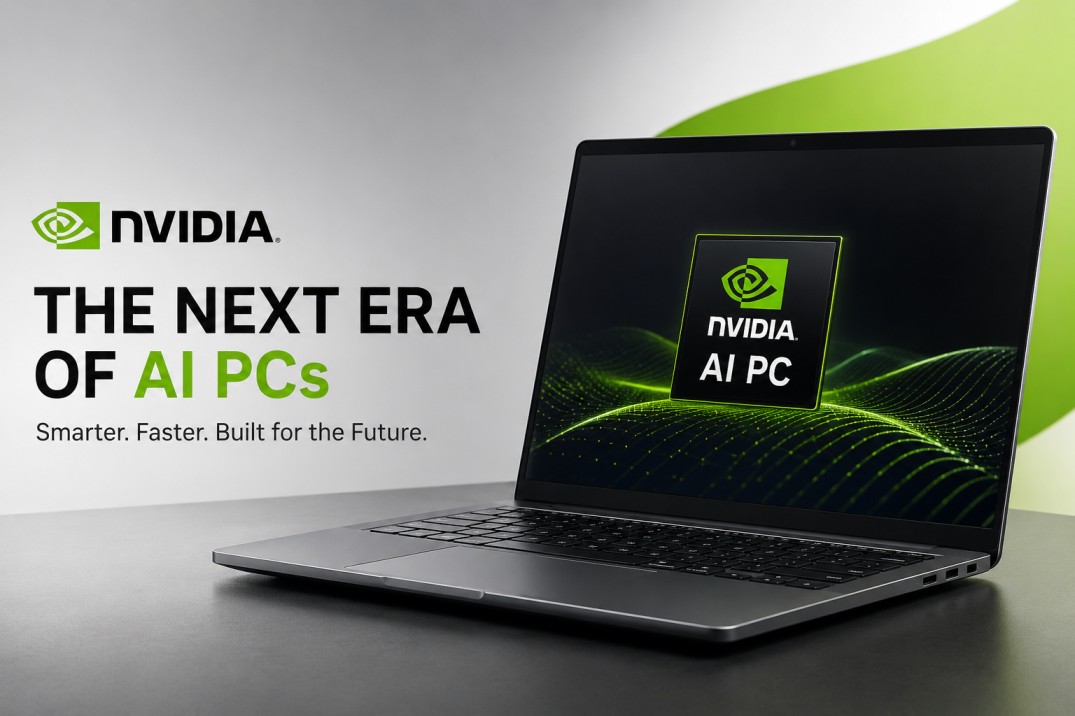
The laptop industry may be heading toward its biggest shift since Apple introduced the M1 chip.
For years, Windows users have faced a difficult choice. They could buy a thin and light laptop with excellent battery life, or they could choose a powerful machine capable of gaming, video editing, and AI workloads.
Finding a device that excels at both has been difficult.
Now, NVIDIA, Microsoft, and several hardware partners are pushing a new vision for AI-powered PCs.
The goal is simple: combine desktop level performance, advanced AI capabilities, and long battery life in a portable laptop.
While many details remain under wraps, the direction of the industry is becoming increasingly clear.
Before Apple Silicon, most laptops relied on traditional x86 processors from Intel and AMD.
These chips delivered strong performance, but battery life and efficiency often suffered.
Apple took a different approach.
The company moved to ARM-based architecture and introduced unified memory.
Instead of keeping the CPU, GPU, and RAM separated, many components could access the same memory pool.
The result was impressive.
Users received:
In response, companies began exploring ARM-based laptops for Windows.
Qualcomm's Snapdragon X series processors became one of the first major attempts to bring Apple-like efficiency to Windows devices.
These laptops offered impressive battery life and improved portability.
However, compatibility remained a challenge.
Many professional users still encountered issues with software support, legacy applications, and certain development tools.
For casual users, these limitations were manageable.
For power users, they often became deal breakers.
Many of today's AI models are trained and optimized using NVIDIA hardware.
Its CUDA platform has become the industry standard for machine learning, AI development, 3D rendering, and scientific computing.
Because of this, NVIDIA has a unique advantage.
Unlike traditional PC manufacturers, NVIDIA already sits at the center of the AI ecosystem.
That makes its potential move into AI-focused laptop platforms especially interesting.
Instead of building laptops around gaming alone, NVIDIA appears to be focusing on a future where AI becomes a core part of everyday computing.
But what does it actually mean?
An AI PC is designed to run artificial intelligence workloads locally rather than relying entirely on cloud servers.
This could include:
Privacy improves because data does not need to leave the device.
Response times become faster.
For years, Windows users have faced a difficult choice. They could buy a thin and light laptop with excellent battery life, or they could choose a powerful machine capable of gaming, video editing, and AI workloads.
Finding a device that excels at both has been difficult.
Now, NVIDIA, Microsoft, and several hardware partners are pushing a new vision for AI-powered PCs.
The goal is simple: combine desktop level performance, advanced AI capabilities, and long battery life in a portable laptop.
While many details remain under wraps, the direction of the industry is becoming increasingly clear.
How Apple Changed the Laptop Industry
When Apple introduced its M1 chip in 2020, it changed expectations for laptops.Before Apple Silicon, most laptops relied on traditional x86 processors from Intel and AMD.
These chips delivered strong performance, but battery life and efficiency often suffered.
Apple took a different approach.
The company moved to ARM-based architecture and introduced unified memory.
Instead of keeping the CPU, GPU, and RAM separated, many components could access the same memory pool.
The result was impressive.
Users received:
- Long battery life
- Excellent performance
- Reduced heat generation
- Silent operation in many workloads
- Better efficiency for creative tasks
Windows Manufacturers Have Been Trying to Catch Up
Apple's success created pressure across the PC industry.In response, companies began exploring ARM-based laptops for Windows.
Qualcomm's Snapdragon X series processors became one of the first major attempts to bring Apple-like efficiency to Windows devices.
These laptops offered impressive battery life and improved portability.
However, compatibility remained a challenge.
Many professional users still encountered issues with software support, legacy applications, and certain development tools.
For casual users, these limitations were manageable.
For power users, they often became deal breakers.
Why NVIDIA's Entry Matters
NVIDIA is already one of the most important companies in artificial intelligence.Many of today's AI models are trained and optimized using NVIDIA hardware.
Its CUDA platform has become the industry standard for machine learning, AI development, 3D rendering, and scientific computing.
Because of this, NVIDIA has a unique advantage.
Unlike traditional PC manufacturers, NVIDIA already sits at the center of the AI ecosystem.
That makes its potential move into AI-focused laptop platforms especially interesting.
Instead of building laptops around gaming alone, NVIDIA appears to be focusing on a future where AI becomes a core part of everyday computing.
The Rise of AI PCs
The phrase "AI PC" has become one of the biggest buzzwords in technology.But what does it actually mean?
An AI PC is designed to run artificial intelligence workloads locally rather than relying entirely on cloud servers.
This could include:
- AI writing assistants
- Image generation tools
- Video editing enhancements
- Voice assistants
- Code generation tools
- Productivity automation
Privacy improves because data does not need to leave the device.
Response times become faster.
Users can also access AI features even when internet connectivity is limited.
Could Windows Finally Get MacBook-Like Efficiency?
One of the biggest complaints about high performance Windows laptops has always been battery life.Gaming laptops deliver impressive performance, but they often come with trade-offs.
These systems are usually:
- Heavy
- Noisy
- Hot under load
- Dependent on chargers
The challenge for Windows manufacturers has been achieving the same balance.
New ARM based AI focused hardware could help bridge that gap.
If successful, future Windows laptops may offer:
- All day battery life
- Professional grade performance
- Advanced AI capabilities
- Thin and lightweight designs
AI Could Become the Next Operating System Layer
One of the most interesting ideas emerging from the AI PC movement is the concept of AI as a system wide layer.Instead of opening individual applications to perform tasks, users could simply describe what they want.
The AI system would then coordinate multiple applications and services automatically.
Imagine asking your computer to:
- Create a presentation
- Analyze a spreadsheet
- Edit a video
- Generate a report
- Organize research notes
This is the long term vision many technology companies are pursuing.
What This Means for Content Creators
Content creators could be among the biggest beneficiaries of AI powered hardware.Applications such as:
- Adobe Photoshop
- Premiere Pro
- Blender
- DaVinci Resolve
- After Effects
Tasks that once required significant manual effort can now be accelerated through machine learning.
Examples include:
- Background removal
- Object selection
- Noise reduction
- Video upscaling
- Automatic captions
- Generative image editing
What About Gaming?
Gaming remains an important part of the PC market.However, the current AI PC movement is not primarily focused on gaming.
The larger goal is creating versatile systems capable of handling productivity, creativity, and AI workloads.
That said, improvements in GPU technology often benefit both gamers and creators.
As hardware becomes more efficient, future laptops could potentially deliver better gaming performance without sacrificing battery life.
What This Means for Pakistani Users
Pakistan's laptop market has traditionally been dominated by imported business laptops, gaming machines, and Apple products.AI-powered Windows laptops could create a new category.
Students, freelancers, software developers, and content creators may benefit from machines that combine portability with strong AI performance.
However, pricing will likely remain a challenge initially.
Early AI-focused laptops are expected to target premium buyers before becoming more affordable over time.
Final Thoughts
The PC industry is entering a new phase.For years, performance was the primary battleground.
Today, the focus is shifting toward artificial intelligence, efficiency, and intelligent automation.
Companies such as NVIDIA, Microsoft, Qualcomm, Intel, AMD, and Apple are all competing to define what the next generation of personal computers will look like.
Whether AI PCs fully deliver on their promises remains to be seen.
However, one thing is becoming clear: future laptops will not simply be faster versions of today's machines.
They will increasingly act as intelligent assistants capable of helping users work, create, and communicate more efficiently than ever before.
SponsoredAdChoices (i)
Compare Smartphone Specs Instantly
Confused which flagship device is perfect for your needs? Use our automated, side-by-side spec comparison system to check benchmark hardware, battery capacities, and pricing models.
Start ComparingThanks for reading!
Join our community for the latest mobile tech news and expert smartphone comparisons.