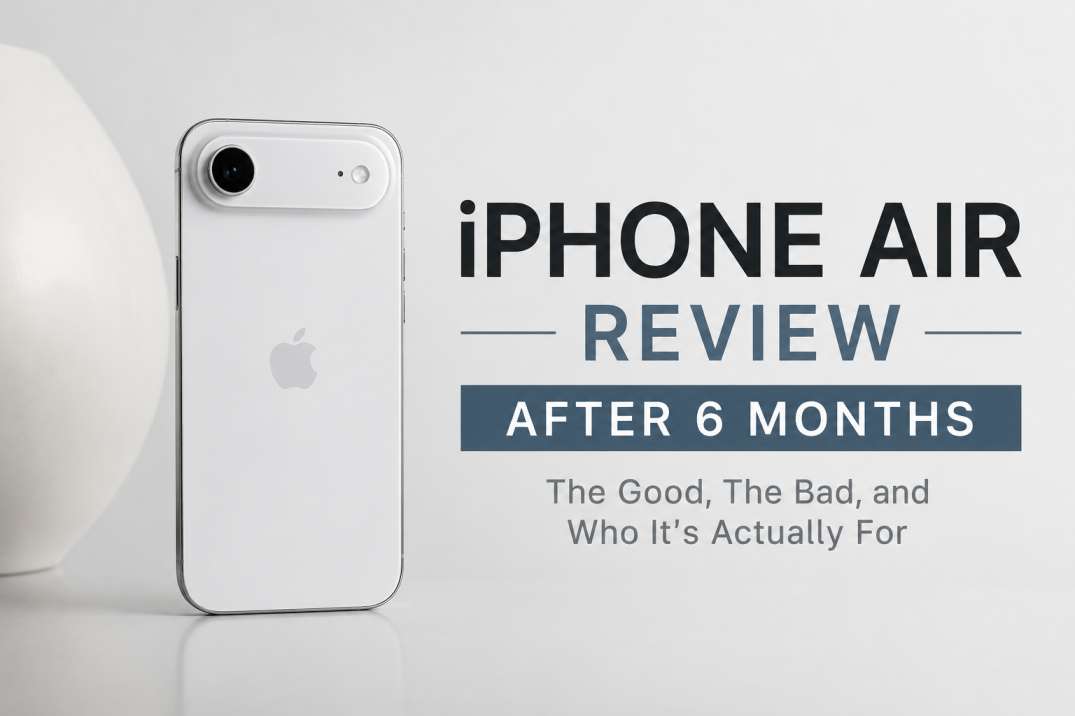
Apple has never been afraid to experiment with design.
The iPhone Air is perhaps one of the boldest examples of that approach in recent years.
At first glance, the phone looks like the future.
It is incredibly thin, very light, and feels too premium in a way that very few smartphones do.
Yet six months after launch, the conversation around the iPhone Air is very different from the excitement that surrounded its release.
The question is simple: does the iPhone Air still make sense after six months of proper usage?
The answer depends entirely on what you value in a smartphone.
Instead of competing directly with Pro models on camera hardware, gaming performance, or advanced features, Apple focused on creating the thinnest and lightest modern iPhone possible.
That design philosophy resulted in a phone that feels unique.
But, it also introduced some compromises that many users may not accept.
The phone feels exceptionally light in hand.
Even after months of use, the lightweight construction remains one of its strongest selling points.
The titanium frame adds a premium feel while maintaining the durability.
Unlike some ultra-thin devices from the past, the iPhone Air does not feel fragile.
The iPhone Air is the opposite.
Carrying it in a pocket or holding it for long periods feels effortless.
For users who prioritize comfort and aesthetics, this device stands out immediately.
The large 6.5 inch panel strikes a nice balance between the standard iPhone and larger Pro Max models.
Key display features include:
In fact, some users may find the larger screen more enjoyable than the regular Pro model for media consumption.
These compromises are the primary reason why many buyers eventually choose other models.
The speakers are clear enough and reasonably loud, but they lack the depth, separation, and quality found on modern flagship smartphones.
If you frequently watch YouTube videos, movies, or listen to music directly from your phone, the difference becomes obvious.
Compared to stereo speaker systems found in Pro models, the experience feels less engaging.
In fact, image quality is often excellent in good lighting conditions.
Photos feature:
The issue is flexibility.
Modern smartphone users have become accustomed to ultra wide cameras, telephoto zoom lenses, and advanced shooting options.
The iPhone Air removes much of that flexibility.
For casual photography, this may not matter.
For travelers, content creators, and photography enthusiasts, it can feel restrictive.
While eSIM technology continues to expand globally, not every region has fully embraced it.
Frequent travelers may find the lack of a physical SIM slot frustrating, especially when switching carriers or using local SIM cards abroad.
The iPhone Air is perhaps one of the boldest examples of that approach in recent years.
At first glance, the phone looks like the future.
It is incredibly thin, very light, and feels too premium in a way that very few smartphones do.
Yet six months after launch, the conversation around the iPhone Air is very different from the excitement that surrounded its release.
The question is simple: does the iPhone Air still make sense after six months of proper usage?
The answer depends entirely on what you value in a smartphone.
iPhone Air at a Glance
The iPhone Air was designed around one core idea: simplicity.Instead of competing directly with Pro models on camera hardware, gaming performance, or advanced features, Apple focused on creating the thinnest and lightest modern iPhone possible.
That design philosophy resulted in a phone that feels unique.
But, it also introduced some compromises that many users may not accept.
Design: The Biggest Reason to Buy the iPhone Air
The first thing anyone notices about the iPhone Air is its design.The phone feels exceptionally light in hand.
Even after months of use, the lightweight construction remains one of its strongest selling points.
The titanium frame adds a premium feel while maintaining the durability.
Unlike some ultra-thin devices from the past, the iPhone Air does not feel fragile.
What Makes the Design Special?
- Ultra thin profile
- Titanium construction
- Lightweight body
- Comfortable one-handed use
- Premium matte finish
The iPhone Air is the opposite.
Carrying it in a pocket or holding it for long periods feels effortless.
For users who prioritize comfort and aesthetics, this device stands out immediately.
Display Quality Remains Excellent
The display is one area where Apple made very few compromises.The large 6.5 inch panel strikes a nice balance between the standard iPhone and larger Pro Max models.
Key display features include:
- 120Hz Pro Motion refresh rate
- High pixel density
- Excellent brightness levels
- Strong color accuracy
- Smooth animations and scrolling
In fact, some users may find the larger screen more enjoyable than the regular Pro model for media consumption.
The Biggest Problem: Too Many Compromises
While the design is impressive, the iPhone Air makes several hard choices that become more noticeable over time.These compromises are the primary reason why many buyers eventually choose other models.
Mono Speakers Feel Outdated
One of the most surprising decisions is the use of mono speakers.The speakers are clear enough and reasonably loud, but they lack the depth, separation, and quality found on modern flagship smartphones.
If you frequently watch YouTube videos, movies, or listen to music directly from your phone, the difference becomes obvious.
Compared to stereo speaker systems found in Pro models, the experience feels less engaging.
Single Camera Limits Flexibility
The camera itself is not bad.In fact, image quality is often excellent in good lighting conditions.
Photos feature:
- Natural colors
- Strong dynamic range
- Consistent skin tones
- Reliable point-and-shoot performance
The issue is flexibility.
Modern smartphone users have become accustomed to ultra wide cameras, telephoto zoom lenses, and advanced shooting options.
The iPhone Air removes much of that flexibility.
For casual photography, this may not matter.
For travelers, content creators, and photography enthusiasts, it can feel restrictive.
eSIM Only Design Won't Suit Everyone
Another controversial decision is the removal of the physical SIM card slot.While eSIM technology continues to expand globally, not every region has fully embraced it.
Frequent travelers may find the lack of a physical SIM slot frustrating, especially when switching carriers or using local SIM cards abroad.
Ironically, one of Apple's most travel-friendly phones becomes less convenient for certain travelers because of this limitation.
Performance Is Better Than Expected
Despite its slim body, the iPhone Air performs extremely well in everyday use.App launches are fast.
Multitasking feels smooth.
Navigation remains responsive.
For most users, the performance difference between the iPhone Air and higher end Pro models will be difficult to notice during normal use.
Real-World Performance
The phone handles:- Social media apps
- Web browsing
- Video streaming
- Messaging
- Light gaming
- Photo editing
Only heavy gaming sessions and demanding creative workloads reveal the advantages of Pro models.
For the average user, performance is more than sufficient.
Battery Life Is Surprisingly Good
Battery life was one of the biggest concerns before launch.Historically, thin iphones have struggled to deliver all day endurance.
Fortunately, the iPhone Air performs much better than expected.
After the initial optimization period, battery life becomes impressively consistent.
Most users should comfortably get through a full day of normal usage.
Battery Performance Highlights
- Reliable all day endurance
- Strong standby performance
- Efficient power management
- Better than many expected from such a thin device
Durability After Six Months
One concern surrounding ultra thin devices is durability.Fortunately, the iPhone Air appears to hold up well over time.
After months of use, the titanium frame remains resistant to wear and tear.
The phone feels sturdy, reliable, and capable of handling everyday travel without concern.
Apple deserves credit for achieving a lightweight design without making the device feel fragile.
Who Should Buy the iPhone Air?
The answer depends on your priorities.The iPhone Air is not trying to be the most powerful iPhone.
It is not trying to be the best camera phone.
It is not trying to offer every possible feature.
Instead, it focuses on delivering a simple, comfortable, premium smartphone experience.
The iPhone Air Is Ideal For:
- Users who value lightweight devices
- People who prioritize design over features
- Casual photographers
- Media consumers
- Users who prefer minimalism
You Should Avoid It If:
- You frequently use zoom cameras
- You want an ultra wide lens
- You care about speaker quality
- You play demanding games
- You need maximum flexibility from your smartphone
My Verdict After Six Months
The iPhone Air is one of the most interesting smartphones Apple has released in years.It succeeds in delivering an incredibly thin and comfortable smartphone experience.
The display is excellent, battery life is surprisingly strong, and performance remains fast.
At the same time, its compromises become more noticeable over time.
The lack of stereo speakers, limited camera system, and reduced feature set make it difficult to recommend to everyone.
This is ultimately a phone for minimalists.
If your priority is having the lightest and most comfortable iPhone possible, the iPhone Air may be exactly what you want.
If you value versatility, photography options, media quality, and premium features, a Pro model remains the better long term investment.
Final Thoughts
The iPhone Air is neither a failure nor a universally great smartphone.It is a niche product with a very specific audience.
Apple took a bold approach by prioritizing thinness and simplicity over feature expansion.
Some users will love that decision.
Others will see it as an unnecessary compromise.
Six months later, the iPhone Air remains a fascinating experiment.
Whether it is the right phone for you depends entirely on how much you value comfort and design compared to flexibility and features.
SponsoredAdChoices (i)
Compare Smartphone Specs Instantly
Confused which flagship device is perfect for your needs? Use our automated, side-by-side spec comparison system to check benchmark hardware, battery capacities, and pricing models.
Start ComparingThanks for reading!
Join our community for the latest mobile tech news and expert smartphone comparisons.