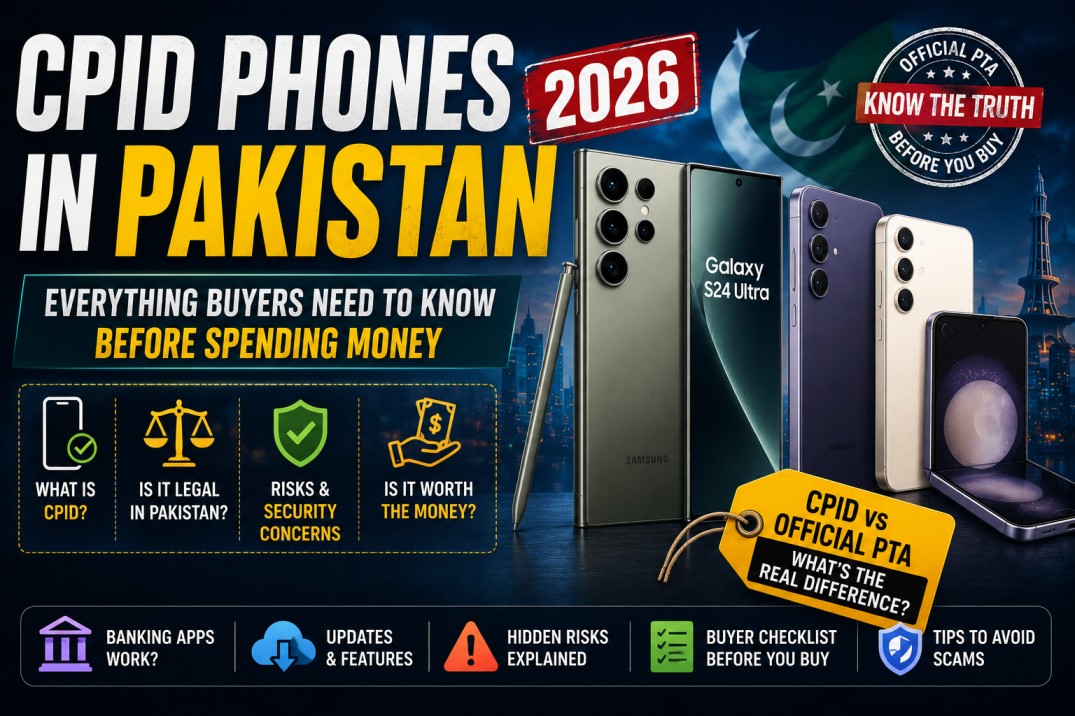
Buying a flagship phone in Pakistan has become frustratingly expensive.
A PTA-approved Galaxy S24 Ultra or newer flagship can cost hundreds of thousands of rupees once taxes are included. Because of that, many buyers have started looking toward alternatives like CPID phones.
Walk through major mobile markets in Lahore, Karachi, or Rawalpindi and you'll hear the term everywhere.
"CPID approved."
"Server approved."
"Same as official PTA."
"Everything works."
The problem is that many buyers spend over Rs. 100,000 on these phones without fully understanding what CPID actually is.
Some people believe it is completely legal.
Others think it is identical to official PTA approval.
Neither view is entirely accurate.
Before spending serious money on a CPID device, it is important to understand how it works, why it became popular, and what risks come with it.
In simple terms, the phone's original IMEI information is modified or replaced through specialized tools and servers so the device can operate on local networks.
Various CPID-related services openly advertise IMEI repair and modification capabilities.
Most CPID phones in Pakistan are Samsung flagship devices because Samsung models are usually the easiest targets for this process.
Popular examples include:
PTA taxes.
Official PTA taxes on premium smartphones can be extremely high.
In many cases, buyers save tens of thousands of rupees by purchasing a CPID phone instead of an officially approved device.
That price difference completely changes buying decisions.
For many users, the choice looks like this:
That is why CPID devices spread so quickly in Pakistan's used-phone market.
They are not exactly the same thing.
Traditional patched phones usually involve software modifications that often require root access.
Those phones commonly face problems such as:
Users often report that software updates, factory resets, and banking applications continue working normally on many CPID devices.
This is one reason many buyers consider CPID devices safer than traditional patched phones.
However, safer does not automatically mean official.
Many sellers describe CPID phones as "PTA approved."
That wording can be misleading.
Pakistan Telecommunication Authority has repeatedly warned against unauthorized IMEI modification, cloning, and patched devices.
PTA has publicly stated that the use, sale, and purchase of illegally verified devices can lead to legal consequences.
PTA has also linked illegal approval methods with network security concerns and fraud risks.
This creates an important distinction:
They are not.
That price gap makes these phones attractive to buyers who want flagship features without paying full PTA costs.
In many markets, Samsung CPID phones are now easier to find than officially approved flagship Samsung devices.
Generally, many CPID devices continue running banking applications because the phones are usually not rooted in the same way traditional patched devices often are.
However, this is not 100% guaranteed.
Banking applications continuously update their security systems.
What works today may not always work forever.
That uncertainty is something buyers consider very rarely.
People often focus only on the initial savings.
They rarely think about long term software compatibility and updates.
That gives them a major advantage over traditional patched phones.
Still, buyers should not assume every device behaves identically.
The quality of the modification process matters.
The seller matters.
The phone's history matters.
This is one reason buying from unknown online sellers can become risky.
A CPID phone may save money at start, but buyers are accepting certain risks.
Potential concerns include:
That does not mean every CPID phone will suddenly stop working.
It does mean buyers should understand that the situation is not as risk-free as some shopkeepers claim.
Before buying:
The problem is that buyers often never ask.
A CPID phone may make sense if:
The smarter approach is considering what could happen two or three years later.
They are not.
Some sellers market CPID devices as if they are simply a cheaper version of official PTA approval.
That oversimplifies the reality.
The phone may function normally.
It may receive updates.
It may work perfectly for years.
But it still exists in a different category than an officially registered device.
Understanding that distinction is important before spending serious money.
That demand created a massive alternative market.
The appeal is easy to understand.
A CPID Galaxy S24 Ultra can look far more attractive than a midrange officially approved phone at a similar price.
But buyers should avoid treating CPID devices as risk free purchases.
The savings are real.
The uncertainties are real too.
If you decide to buy one, the smartest approach is simple:
It is the one bought without understanding how the phone was approved in the first place.
A PTA-approved Galaxy S24 Ultra or newer flagship can cost hundreds of thousands of rupees once taxes are included. Because of that, many buyers have started looking toward alternatives like CPID phones.
Walk through major mobile markets in Lahore, Karachi, or Rawalpindi and you'll hear the term everywhere.
"CPID approved."
"Server approved."
"Same as official PTA."
"Everything works."
The problem is that many buyers spend over Rs. 100,000 on these phones without fully understanding what CPID actually is.
Some people believe it is completely legal.
Others think it is identical to official PTA approval.
Neither view is entirely accurate.
Before spending serious money on a CPID device, it is important to understand how it works, why it became popular, and what risks come with it.
What Is a CPID Phone?
CPID is a method commonly used to make certain smartphones work on Pakistani mobile networks without paying the full official PTA tax.In simple terms, the phone's original IMEI information is modified or replaced through specialized tools and servers so the device can operate on local networks.
Various CPID-related services openly advertise IMEI repair and modification capabilities.
Most CPID phones in Pakistan are Samsung flagship devices because Samsung models are usually the easiest targets for this process.
Popular examples include:
- Galaxy S22 Ultra
- Galaxy S23 Ultra
- Galaxy S24 Ultra
- Galaxy Z Fold series
- Galaxy Z Flip series
Why Did CPID Become So Popular?
The answer is simple.PTA taxes.
Official PTA taxes on premium smartphones can be extremely high.
In many cases, buyers save tens of thousands of rupees by purchasing a CPID phone instead of an officially approved device.
That price difference completely changes buying decisions.
For many users, the choice looks like this:
- Official PTA approved midrange phone
- CPID flagship phone with better cameras and performance
That is why CPID devices spread so quickly in Pakistan's used-phone market.
How Is CPID Different From a Patched Phone?
Many people confuse CPID phones with patched phones.They are not exactly the same thing.
Traditional patched phones usually involve software modifications that often require root access.
Those phones commonly face problems such as:
- Banking app restrictions
- Software update issues
- Factory reset problems
- Security warnings
Users often report that software updates, factory resets, and banking applications continue working normally on many CPID devices.
This is one reason many buyers consider CPID devices safer than traditional patched phones.
However, safer does not automatically mean official.
Is CPID Legal in Pakistan?
This is where things become complicated.Many sellers describe CPID phones as "PTA approved."
That wording can be misleading.
Pakistan Telecommunication Authority has repeatedly warned against unauthorized IMEI modification, cloning, and patched devices.
PTA has publicly stated that the use, sale, and purchase of illegally verified devices can lead to legal consequences.
PTA has also linked illegal approval methods with network security concerns and fraud risks.
This creates an important distinction:
- Official PTA approval = tax paid through legal registration channels
- CPID approval = alternative IMEI based modification methods
They are not.
Why Are Samsung CPID Phones So Common?
Samsung devices dominate the CPID market for several reasons.- High PTA taxes on flagship models
- Strong resale demand
- Wide repair support in Pakistan
- Popular Ultra series devices
That price gap makes these phones attractive to buyers who want flagship features without paying full PTA costs.
In many markets, Samsung CPID phones are now easier to find than officially approved flagship Samsung devices.
Do Banking Apps Work on CPID Phones?
This is one of the most common questions buyers ask.Generally, many CPID devices continue running banking applications because the phones are usually not rooted in the same way traditional patched devices often are.
However, this is not 100% guaranteed.
Banking applications continuously update their security systems.
What works today may not always work forever.
That uncertainty is something buyers consider very rarely.
People often focus only on the initial savings.
They rarely think about long term software compatibility and updates.
Can CPID Phones Receive Software Updates?
One reason CPID became popular is that many Samsung devices continue receiving software updates normally after CPID modification.That gives them a major advantage over traditional patched phones.
Still, buyers should not assume every device behaves identically.
The quality of the modification process matters.
The seller matters.
The phone's history matters.
This is one reason buying from unknown online sellers can become risky.
What Are the Risks of Buying a CPID Phone?
This is the part many sellers avoid discussing.A CPID phone may save money at start, but buyers are accepting certain risks.
Potential concerns include:
- Future PTA crackdowns
- IMEI verification problems
- Resale complications
- Legal uncertainty
- Network related issues
That does not mean every CPID phone will suddenly stop working.
It does mean buyers should understand that the situation is not as risk-free as some shopkeepers claim.
How Can You Identify a CPID Phone?
Many buyers accidentally purchase CPID devices because they never verify the phone properly.Before buying:
- Dial *#06# and check IMEI numbers
- Verify PTA status through official channels
- Check whether the phone was officially approved
- Compare IMEI details with the box
- Ask directly if the phone is CPID, patched, or official PTA
The problem is that buyers often never ask.
Should You Buy a CPID Phone in 2026?
The answer depends on your priorities.A CPID phone may make sense if:
- You understand the risks
- You want flagship hardware at a lower price
- You are comfortable with resale uncertainty
- You trust the seller
- You want complete legal certainty
- You keep phones for many years
- You rely heavily on banking and security-sensitive apps
- You want maximum resale value
The smarter approach is considering what could happen two or three years later.
The Biggest Mistake Buyers Make
The biggest mistake is assuming CPID phones are identical to officially approved devices.They are not.
Some sellers market CPID devices as if they are simply a cheaper version of official PTA approval.
That oversimplifies the reality.
The phone may function normally.
It may receive updates.
It may work perfectly for years.
But it still exists in a different category than an officially registered device.
Understanding that distinction is important before spending serious money.
Final Verdict
CPID phones became popular in Pakistan because official PTA taxes pushed flagship devices beyond what many buyers consider reasonable.That demand created a massive alternative market.
The appeal is easy to understand.
A CPID Galaxy S24 Ultra can look far more attractive than a midrange officially approved phone at a similar price.
But buyers should avoid treating CPID devices as risk free purchases.
The savings are real.
The uncertainties are real too.
If you decide to buy one, the smartest approach is simple:
- Verify everything
- Check PTA status carefully
- Buy from trusted sellers
- Understand exactly what you are purchasing
It is the one bought without understanding how the phone was approved in the first place.
SponsoredAdChoices (i)
Compare Smartphone Specs Instantly
Confused which flagship device is perfect for your needs? Use our automated, side-by-side spec comparison system to check benchmark hardware, battery capacities, and pricing models.
Start ComparingThanks for reading!
Join our community for the latest mobile tech news and expert smartphone comparisons.